Local AI & LLMs / 6 min read
Pushing 32GB VRAM: Running Qwen & 30B+ Models at Full Precision Locally
Why running 30B+ open-weight models on a dedicated 32GB VRAM rig outperforms hosted APIs in latency, cost, and private codebase indexing.
The Shift from Cloud APIs to Local Open-Weights
The release of frontier open-weight models like Qwen 2.5, Qwen 3 Coder (32B), DeepSeek, and Llama 3.3 has broken the assumption that top-tier reasoning requires cloud API dependency. When running locally, there are no rate limits, no per-token billing spikes, and zero network round-trip overhead.
For software engineers and technical founders working with proprietary intellectual property, local execution guarantees 100% air-gapped privacy. Client codebases, sensitive schemas, and private database credentials never leave local silicon.
Unlocking Full Precision & 128k Context on 32GB VRAM
The real hardware bottleneck for local LLMs has always been VRAM capacity and memory bandwidth. Consumer cards with 8GB–16GB force aggressive 4-bit quantization, degrading reasoning depth and coding syntax reliability.
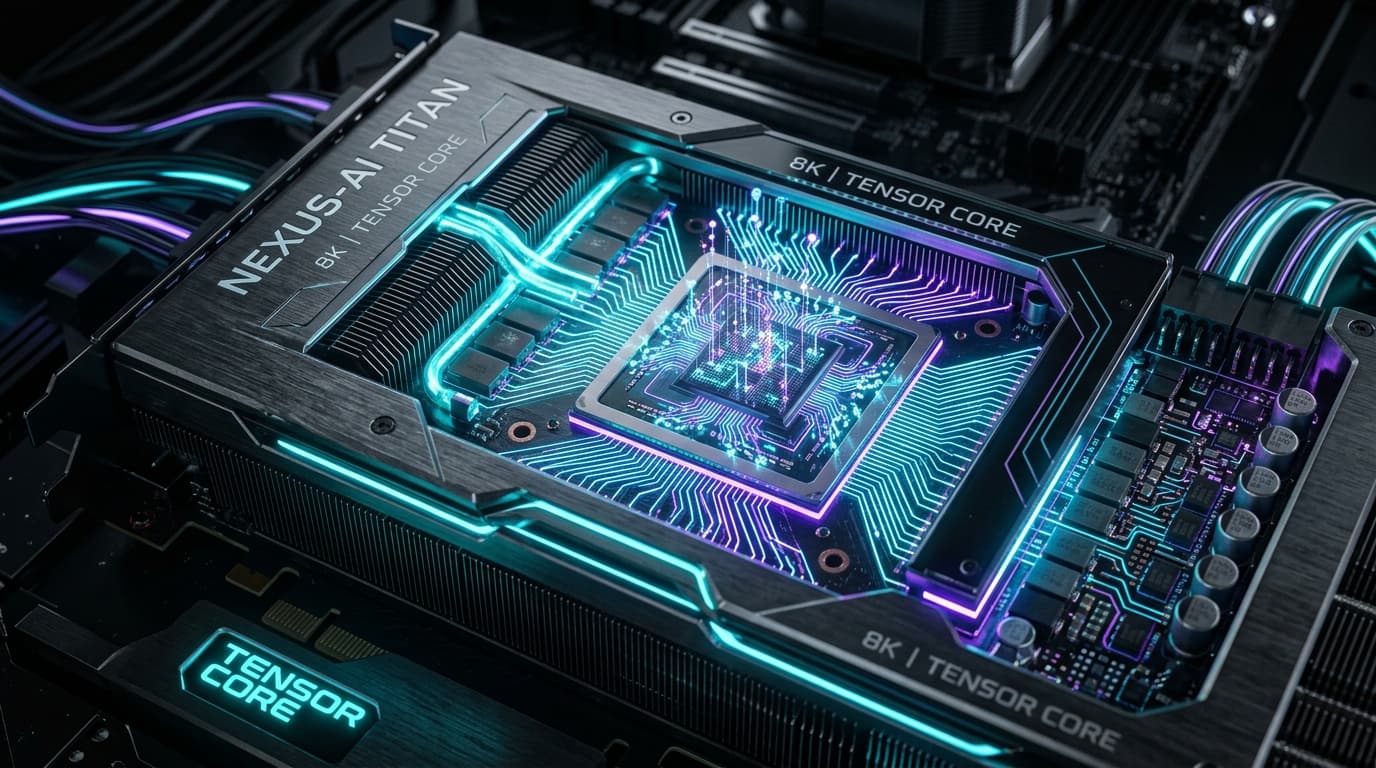
Equipped with 32GB of high-speed GDDR7 VRAM and 128GB of DDR5 system RAM, 27B–32B parameter models can run at unquantized FP16 or high-fidelity Q8 precision with expanded 128k context windows. Through vLLM, llama.cpp, and Ollama, token throughput easily exceeds 80–90 tokens per second—faster than human reading speed and snappier than throttled commercial endpoints.
Deterministic Agentic Workflows & Tool Calling
Beyond raw text generation, local models excel when wired into autonomous developer loops. With low-latency local inference, models can perform recursive linting, AST analysis, unit test generation, and database schema migrations across hundreds of files in seconds.
Having dedicated local compute capability transforms AI from an occasional conversational assistant into a continuous, real-time background compiler for complex software engineering.